A cist (/ˈsɪst/ or /ˈkɪst/; also kist /ˈkɪst/;[1][2] from Greek: κίστη, Middle Welsh Kist or Germanic Kiste) is a small stone-built coffin-like box or ossuary used to hold the bodies of the dead. Examples can be found across Europe and in the Middle East.[3][4][5][6] A cist may have been associated with other monuments, perhaps under a cairn or long barrow. Several cists are sometimes found close together within the same cairn or barrow. Often ornaments have been found within an excavated cist, indicating the wealth or prominence of the interred individual.

Kistvaen on the southern edge of Dartmoor in Drizzlecombe (England) showing the capstone and the inner cist structure.
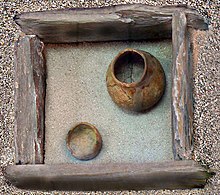
Cist
This old word is preserved in the nordic languages as "kista" in Swedish and "kiste" in Danish and Norwegian, where it is the word for a funerary coffin.[7] [8] [9]
Regional examples

Stone cist graves from a Bronze Age site in Northern Estonia
 Play media
Drone video of stone cist graves in Jõelähtme, Estonia
- England
- Hepburn woods, Northumberland
- Estonia
- Jõelähtme (Rebala) stone-cist graves, Harju County
- Guatemala
- Mundo Perdido, Tikal, Petén Department
- Israel
- Tel Kabri (Area A), Upper Galilee
- Scotland
- Balblair cist, Beauly, Inverness
- Dunan Aula, Craignish, Argyll and Bute
- Holm Mains Farm, Inverness
| This article uses material from the Wikipedia article Metasyntactic variable, which is released under the Creative Commons Attribution-ShareAlike 3.0 Unported License. |